
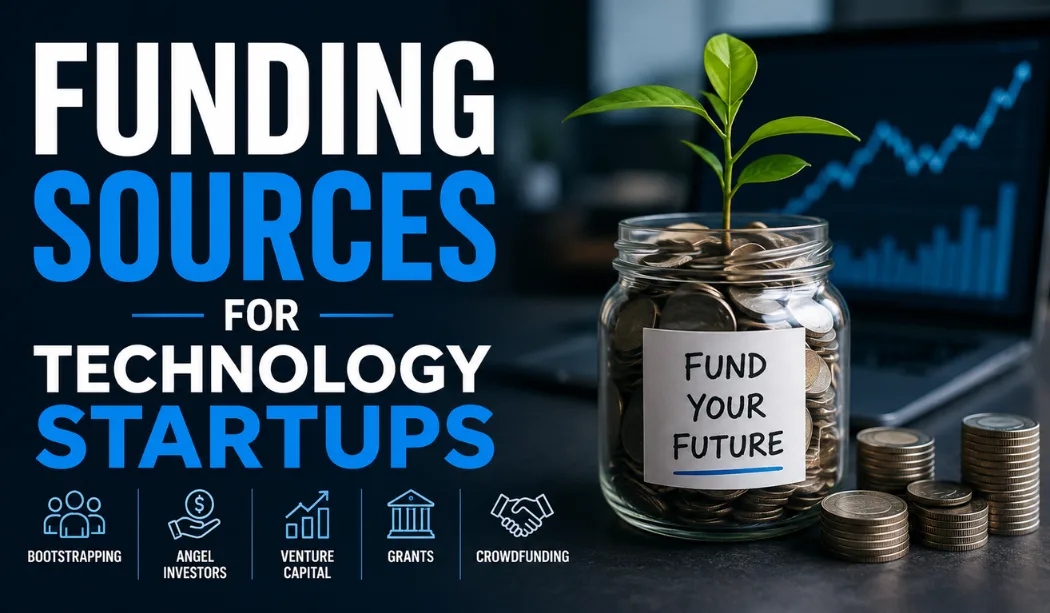
The process of starting a brand new technology company is similar to preparing a rocket to launch. There's an amazing idea and a talented group, however without a fuel source that your company needs, it will never begin to take off. In the world of digital the most vital ingredient is capital. Finding the most suitable funding sources for technology startups is a crucial process to turn your program or hardware idea into a viable, expandable company. It doesn't matter if you're developing an AI device, mobile application, or SaaS platform Knowing where you can find money can help you recruit top engineers, create your own product and compete with the market.
Why Do Technology Startups Need Funding?
There are many people who ask how come technology-related startups need to raise funds even if it's just code? In reality, building high-quality technology can be expensive. Tech companies require money in order to start hiring highly skilled engineers, set up safe servers and sell their goods to the world. The majority of tech firms don't make money in the first few months. They require financial stability for survival while they expand. Cash flow can help them grow rapidly before competitors take control of the market.
What Are Funding Sources for Technology Startups?
When we speak of the sources of funding for tech startup companies it refers to various places where entrepreneurs can go for money. They could be private individuals as well as large organizations, and even the government.
Every source comes with different guidelines. Certain sources want to own a portion of the company's profits, whereas others require that you return the funds by way of interest. The knowledge of these alternatives will allow you to decide on the most appropriate path that will meet your company's goals.
Startup Funding Stages Explained
Prior to looking for investors, it's important be aware of where you are. The process of raising capital is a clear process.
Seed and Early Stage Funding for Technology Startups
This is where you begin. Initial stage financing for startups in the field of technology typically occurs in the case of an idea or prototype concept. The money is used to try out the market to see whether people really want your idea.
Growth and Series Stages
After your startup is operational and generating some revenue Once you have a product that is profitable, you can enter your Series A, B as well as the C round. In these rounds, you search for huge financing opportunities for young tech companies that want to expand into new markets, recruit sales teams and purchase smaller rivals.
Read also: The Venture Capital Funding Process: A Step-by-Step Guide for
Top 10 Funding Sources For Technology Startups

Selecting the best partner for your business is crucial. These are the best ten methods to finance your tech business now.
1. Bootstrapping
It means that you can finance the business by using your personal savings as well as early revenue from sales. This allows you to remain in complete control but limits your growth rate.
2. Friends and Family
A lot of founders get their initial several thousand dollars from individuals whom they already trust and know their company. Be sure to keep these agreements professional by using transparent legal agreements.
3. Crowdfunding
Sites such as Kickstarter let hundreds of ordinary people to order your item in advance. This proves that people are interested in your product.
4. Incubators and Accelerators
Programmes such as Y Combinator give you small amount of cash, a no-cost office space and professional guidance in exchange in exchange for a tiny portion of your business.
5. Angel Investors
These are individuals with wealth who have invested their own money into small-scale businesses. They usually offer excellent business advice, along with money.
6. Venture Capital Firms
Venture capitalists control institutional fund pools. They search for companies with high growth which can grow at a rapid pace.
7. Private Equity Firms
The firms put large amounts of cash into old, established tech firms to improve them to increase the value of their products.
8. Government Programs
A lot of countries offer grants that encourage local creativity. They provide great money that is not dilutive and which you don't must repay.
9. Venture Debt and Startup Loans
It's a special type of bank loan to venture-backed companies. This loan provides you with cash, without requiring customers to forfeit additional ownership of the business.
10. Corporate Capital
Big tech companies frequently invest in startups for access to cutting-edge technology and tools, as well as cutting-edge concepts.
Deep Dive into Venture Capital for Tech Startups
When we think about Silicon Valley success, they typically imagine venture capital. Venture capital designed for startup companies in the tech sector is designed for companies that could grow 10 times more within a short time. Venture capitalists don't just provide you with money, they also provide you with a team of specialists. They also purchase an enormous portion of your business, and they expect an enormous return on their investments within the next decade.
"Venture capital is high-octane fuel. If you put it in a rocket, you can reach the stars. If you put it in a regular car, you might just blow up the engine." -- Tech Investment Insight
Comparing Your Tech Funding Paths
All startup funds are not made equal. Let's take a look at how the different model financials compare to each and each.
Startup Loans vs Investor Funding
The argument between startups loans and investors financing boils down to the risk of and the control. Loans must be repaid each month. This can make a company sluggish and that has low revenues. However investors do not require monthly payments however, you are able to are able to give away part of your company for the rest of time.
Private Equity vs Venture Capital
If you are looking at the two types of private equity vs. venture capital the timing of your investment is crucial. Venture capitalists put money into young company that are risky and have high potential for growth. Private equity firms purchase solid, mature companies which require help in optimizing their business processes.
SaaS Funding vs Traditional Startup Funding
Software-as-a-Service companies have regular, predictable subscription revenue. This is why SaaS-based funding in comparison to traditional start-up funding can be much more adaptable. SaaS founders are able to use the revenue-based method of financing. They can borrow funds in accordance with the monthly revenue they earn rather than sacrificing equity.
Read also: Funding Request and Exit Strategy Explained for Startups.
Special Funding Options for SaaS and AI Startups

Technology is advancing rapidly and emerging industries require special instruments for financial management. Nowadays, there are special financing options available to SaaS as well as AI startup companies since these companies need massive computing power from the beginning. AI startup companies require large initial investments in data training as well as cloud storage. Investors who invest in AI startups examine your own algorithms as well as your data security.
Startup Funding for Blockchain Startups
Web3 is a different area. If you are looking for the funding of blockchain companies the founders typically utilize token sales in addition to the standard equity. These allow global communities to directly fund projects via the decentralized network.
Government Funding Sources for Technology Startups
Don't overlook the status of your business. government funding options for startups in the field of technology are a great option since they don't take any of the business's equity.
Programmes such as the Small Business Innovation Research (SBIR) grants offered in the United States, or Startup India initiatives provide an uncontaminated source of capital for research-intensive tech companies. They are extremely competitive, however they also provide the ultimate freedom in financial terms.
How Do Technology Startups Get Funding?
Finding out where the money is will only help you in securing the funds. Also, you must know what it takes to obtain financing on the ground. This process takes preparation perseverance, determination, and lots of networking.
In the beginning, you need to build the Minimum Viable Produ (MVP) in order to show that the software is functional. The next step is to create a crystal clear pitch deck which explains your problem, the solution, as well as the amount of market. If you discover investors who are interested You will then sign a contract and conduct due diligence tests before the funds are deposited in your bank.
Finding the Best Funding Options for Tech Startups
The ideal funding strategies for technology startups will depend on the stage of growth you are in as well as your long-term goals. If you're seeking total control of your business, start a bootstrap as soon as you can. If you're looking to take over the global market in a matter of hours Venture capital is the ideal option.
Make sure you create a stunning product that can solve a genuine need. If your numbers are impressive then the investors you want will be able to locate your company.
Frequently Asked Questions
What is the easiest way to fund a new tech startup?
Asking friends or relatives is typically the best method to begin. This requires less paperwork, and lets you create an initial prototype of your service in a short time.
Do I lose control of my company if I take venture capital?
You do lose some control. Venture capitalists hold a portion of your shares and typically be a part of the board of directors. This will assist in making important decision-making decisions in your business.
Can a tech startup get a standard bank loan?
It's very difficult for startups in the early stages of tech to secure traditional bank loans due to the fact that they do not have physical assets such as construction sites or machinery that they can make collateral.